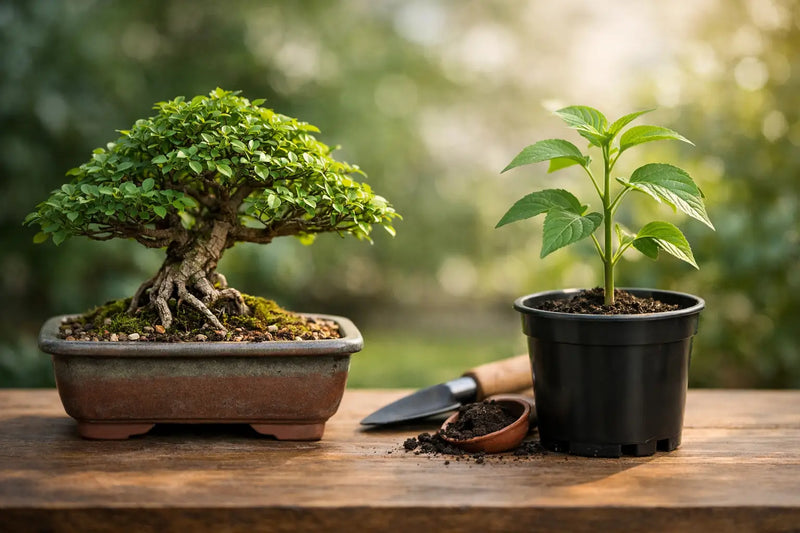
A tiny tree on a bookshelf looks like a power move. A tiny tree slowly dropping every leaf because it lives six feet from a north-facing window looks less iconic. So, can bonsai grow indoors? Absolutely, but “indoors” is not a species category, and bonsai are not decorative furniture with roots.
The good news: a well-chosen indoor bonsai can look wildly good in a living room, studio, or office. The catch: it needs actual growing conditions, not vibes, misting rituals, or a cute pot with nowhere for water to go. Give it the right tree, enough light, breathable soil, and proper drainage, and you have a living sculpture with serious staying power.
Can Bonsai Grow Indoors Year-Round?
Some can. Many cannot.
Most classic bonsai trees people picture - pines, junipers, maples, elms grown as temperate specimens - are outdoor trees. They need changing seasons and a winter dormancy period. Keeping a juniper indoors year-round is one of plant culture’s most common expensive mistakes. It may stay green for a while, then quietly decline when the stored energy runs out. No amount of motivational talking fixes a tree that needs winter.
Indoor bonsai are usually tropical or subtropical species that can handle stable home temperatures. They still prefer fresh air, strong light, and a little summer outside when conditions allow, but they do not require a freezing winter nap to stay healthy.
That distinction matters before you fall in love with a trunk line or an artist-made planter. A beautiful container should frame a tree’s character, not become its final resting place.
The Best Bonsai for Indoor Growing
If your bonsai will live inside most of the year, start with a species that will not hold a grudge about it. Ficus is the classic choice for good reason: it tolerates indoor conditions better than most trees, responds well to pruning, develops gnarly roots, and brings a bold, tropical presence without acting precious.
Dwarf jade, also sold as portulacaria, is another strong option. It is technically a succulent, which makes it a great fit for bright spaces and plant owners who tend to over-love their watering can. Its small leaves and thickening trunk make it an excellent bonsai subject, especially for a more sculptural, desert-adjacent look.
Hawaiian umbrella tree can work well in homes with decent light, while Fukien tea can be gorgeous but is more temperamental. It wants warmth, humidity, and consistency. Chinese elm is often marketed as an indoor bonsai, but it is more accurately a flexible tree that generally thrives best with outdoor time and seasonal changes.
The easy rule: buy tropical bonsai for indoor life. Save junipers, pines, and Japanese maples for the patio, balcony, yard, or a very committed outdoor setup. They are not houseplants in disguise.
Light Is the Whole Game
A sunny windowsill is not automatically high light. Glass cuts intensity, days get shorter, nearby buildings cast shade, and most rooms are much dimmer than they look to human eyes. Your bonsai needs to photosynthesize, not admire the view.
Place an indoor bonsai directly beside your brightest window, ideally one with strong south or west exposure. East-facing light can work for less demanding species, particularly if the tree also gets supplemental light. Keep foliage close to the glass without pressing against a freezing winter pane or scorching in intense summer heat.
If your home does not get several hours of strong natural light, use a grow light. This is not cheating. It is the move. A full-spectrum LED positioned at an appropriate distance above the canopy can make indoor bonsai care far more predictable. Run it on a timer for roughly 10 to 14 hours daily, then adjust based on the tree, season, and light strength.
Watch the plant, not just the setup. Long, stretched shoots, oversized new leaves, weak growth, and leaf drop often point to insufficient light. A tree receiving enough light grows compactly and has the energy to recover from pruning, repotting, and the occasional missed watering.
Watering Without Drowning the Roots
Bonsai are planted in small volumes of soil, so watering is more hands-on than caring for a large houseplant. The goal is not to water every Tuesday. The goal is to water when the root zone is approaching dryness.
Check the soil surface with a finger or wooden chopstick. When it is starting to dry, water thoroughly until it runs from the drainage hole. Then let excess water drain fully. Do not leave the pot sitting in a saucer of water unless you are using pebbles to create humidity and the base of the pot remains above the waterline.
How often this happens depends on light, temperature, tree species, soil mix, pot size, and season. A ficus in bright summer light may need water several times a week. The same tree in a dim winter room may need far less. Calendar-based watering is how roots get wrecked.
Humidity can help tropical trees cope with dry heated air, but it is not a substitute for watering correctly or giving the tree more light. A humidity tray may offer a modest boost. Grouping plants can help, too. Daily misting is mostly a nice little ceremony unless your room is extremely dry.
The Pot Has to Do More Than Look Good
This is where style and plant care need to get along.
A bonsai pot should have drainage holes. Period. If it does not, use it as a cachepot, display vessel, or home for something that can remain in a nursery pot inside it. Never plant a bonsai directly into a sealed ceramic bowl just because the glaze is sexy. Root rot is not part of the aesthetic.
Handmade ceramic bonsai pots bring texture, weight, and a one-of-one feel that plastic cannot touch. But function matters as much as surface. Look for a vessel with drainage, a stable footprint, and proportions that support the tree rather than swallowing it. A shallow pot emphasizes age and movement in a bonsai. A deeper handmade planter can suit a young ficus, a root-over-rock composition, or a bonsai-in-training that needs more room to build strength.
Unglazed clay can dry faster, which may be helpful for jade and other drought-tolerant subjects. Glazed ceramic tends to hold moisture longer and can make a strong visual contrast with bark, moss, and foliage. Neither is automatically better. Match the pot to your watering habits, the tree’s needs, and the mood you want on the shelf.
At The American Gringo, the whole point is that a planter can be functional art. Your bonsai deserves that energy, just without the no-drainage-hole nonsense.
Use a Gritty Bonsai Soil Mix
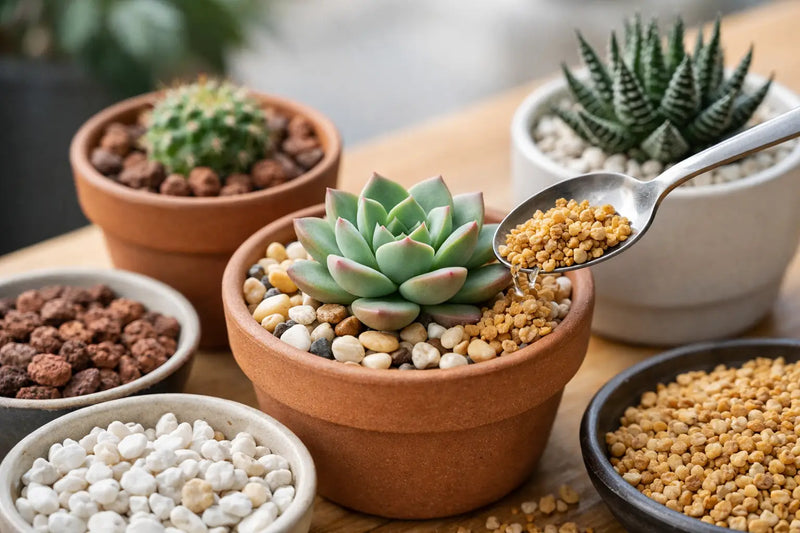
Regular potting soil is usually too dense for bonsai. In a shallow container, it compacts, stays wet too long, and starves roots of oxygen. Bonsai soil should drain quickly while retaining enough moisture for fine roots to work.
A quality mix commonly includes inorganic particles such as pumice, lava rock, akadama, or similar gritty components, sometimes balanced with a small amount of organic material. The exact recipe depends on your climate and species. Ficus and Fukien tea appreciate more consistent moisture than dwarf jade, while jade benefits from a faster-draining blend.
If watering runs straight through a newly potted tree in seconds, the mix may be too dry, hydrophobic, or too coarse for your environment. If it stays soggy for days, it is too dense, the pot lacks drainage, or the tree is not getting enough light to use the water. Bonsai care is a conversation between roots, soil, pot, and placement.
Keep the Routine Simple and Sharp
Indoor bonsai do best when care is consistent, not fussy. Rotate the tree occasionally so one side does not hog all the window light. Fertilize lightly during active growth, usually spring through early fall, with a balanced fertilizer appropriate for bonsai or houseplants. Pause or reduce feeding when growth slows in low-light winter conditions.
Prune new shoots to maintain shape, but do not repeatedly cut a struggling tree. Pruning is a design tool, not CPR. Repot every couple of years depending on species, age, root growth, and soil breakdown. Spring is generally the safest time for major root work on many species, though tropical bonsai are often repotted once they are actively growing in warm conditions.
Pests can show up indoors, especially spider mites, scale, and mealybugs. Check undersides of leaves and branch joints when you water. Catching a problem early is way less dramatic than trying to rescue a sticky, leafless tree later.
Read the Signs Before Your Bonsai Gets Loud
Yellow leaves can mean overwatering, low light, a sudden location change, or normal leaf turnover. Crispy leaf edges may mean underwatering, dry air, fertilizer buildup, or heat stress. Leaf drop after bringing a bonsai home is common because the tree is adjusting to a new environment.
Do not panic-repot at the first dropped leaf. Give the tree stable light, appropriate watering, and time. But if the soil smells sour, stays soaked, or the trunk base feels soft, act fast. Those are root-health warnings, not a request for another misting bottle.
A bonsai indoors is not the easy route. It is the intentional route. Choose a species that belongs in your conditions, give it more light than you think, and plant it in a drainage-ready ceramic piece worthy of the tree’s weird little drama. The result is not just a plant on a table. It is a living object that gets better with age.